
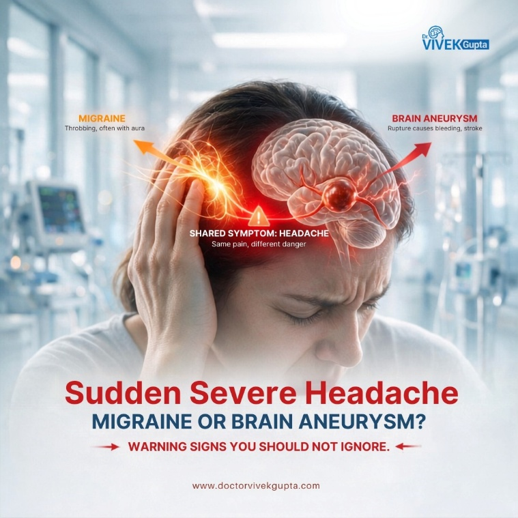
Headache is one of the most common health problems people experience. Many headaches are due to migraine, stress, lack of sleep, dehydration, sinus issues, or eye strain. However, not every headache is harmless. A sudden severe headache, especially one that feels very different from your usual headache, should never be ignored.
Sometimes, a sudden and intense headache can be a warning sign of a serious brain condition such as a brain aneurysm. A ruptured brain aneurysm can cause bleeding in or around the brain and may become life-threatening if treatment is delayed. A sudden, severe headache is widely recognized as a key symptom of a ruptured aneurysm.
This is why it is important to understand the difference between a typical migraine and a possible aneurysm-related headache.
What Is a Migraine?
A migraine is a neurological condition that can cause moderate to severe headache, often on one side of the head. It may be associated with nausea, vomiting, sensitivity to light, sensitivity to sound, visual aura, or tiredness. Migraine pain often builds gradually and may last for several hours.
Many people who have migraine can identify their usual pattern. For example, they may know that their headache starts slowly, comes with light sensitivity, or improves after rest and medicines prescribed by their doctor.
However, if a headache suddenly feels different, unusually intense, or comes with neurological symptoms, it should not be dismissed as “just migraine.”
What Is a Brain Aneurysm?
A brain aneurysm, also called a cerebral aneurysm, is a bulge or balloon-like swelling in a weakened area of a blood vessel in the brain. Many unruptured aneurysms may not cause symptoms and can remain silent for a long time. But if an aneurysm leaks or ruptures, it can cause bleeding in the brain, also known as a hemorrhagic stroke or subarachnoid hemorrhage.
You can learn more about Cerebral Aneurysm Treatment and advanced treatment options such as coiling and flow diverter placement.
Migraine vs Brain Aneurysm Headache: What Is the Difference?
A migraine usually follows a familiar pattern for the patient. It may build gradually and can be linked with triggers such as stress, lack of sleep, certain foods, hormonal changes, or bright light.
An aneurysm-related headache, especially in case of rupture, is usually sudden, severe, and different from routine headache. It comes within seconds or few minutes and is usually extremely severe. It may be described as the worst headache of life. The National Institute of Neurological Disorders and Stroke advises immediate emergency attention for sudden, severe headache, especially when associated with other symptoms.
Warning Signs You Should Not Ignore
Seek urgent medical care if a sudden severe headache is associated with any of the following symptoms:
- Sudden, explosive headache that reaches maximum intensity quickly
- Headache described as the “worst headache ever”
- Nausea or vomiting
- Blurred vision or double vision
- Neck stiffness
- Weakness or numbness in the face, arm, or leg
- Difficulty speaking
- Confusion or drowsiness
- Seizure
- Fainting or loss of consciousness
These symptoms can indicate bleeding, stroke, or another serious brain-related emergency. A ruptured aneurysm is a medical emergency and should be evaluated immediately.
Why Timely Diagnosis Matters
In brain emergencies, time is critical. A ruptured aneurysm can cause bleeding around the brain, increase pressure inside the skull, and damage brain tissue. Delayed treatment can increase the risk of serious complications.
Doctors may recommend urgent brain imaging such as CT scan, MRI, CT angiography, MR angiography, or cerebral angiography depending on the patient’s symptoms and condition. These tests help identify bleeding, aneurysm location, aneurysm size, and the most suitable treatment plan.
If your headache is sudden, intense, and unusual, it is always safer to get evaluated rather than wait.
Treatment Options for Brain Aneurysm
Treatment depends on whether the aneurysm is ruptured or unruptured, its size, shape, location, and the patient’s overall health. In selected cases, advanced minimally invasive neurointerventional procedures may be recommended.
Common treatment options may include:
Endovascular Coiling: A minimally invasive procedure where tiny coils are placed inside the aneurysm to reduce blood flow into it.
Flow Diverter Placement: A special stent-like device may be used to redirect blood flow away from the aneurysm.
Surgical Clipping: In some cases, open surgery may be required to close the aneurysm.
Observation and Follow-up: Some small, unruptured aneurysms may be monitored with regular imaging if the risk of treatment is higher than the risk of rupture. Mayo Clinic notes that some brain aneurysms do not always require immediate treatment and may be followed carefully depending on risk factors.
For advanced neurovascular procedures, you can explore Interventional Neuroradiology services.
Can a Migraine Patient Also Have an Aneurysm?
Yes, a person with a history of migraine can still develop another condition. This is why comparing the headache with your usual pattern is important.
If your headache is sudden, unusually severe, different from your regular migraine, or associated with neurological symptoms, do not self-diagnose. A specialist evaluation and imaging may be required to rule out serious causes.
When Should You Go to Emergency?
You should seek emergency medical care immediately if:
- The headache starts suddenly and severely
- It feels like the worst headache of your life
- You have vomiting, fainting, seizure, or neck stiffness
- You develop weakness, numbness, vision problems, or speech difficulty
- You become confused, drowsy, or lose consciousness
- The headache starts after exertion, coughing, sexual activity, or sudden strain
These are red flags and should not be treated casually.
Brain Aneurysm and Stroke Connection
A ruptured aneurysm can cause bleeding in the brain and may lead to a hemorrhagic stroke. Stroke symptoms can include sudden weakness, speech difficulty, facial drooping, vision problems, balance issues, or severe headache.
To understand stroke symptoms and emergency care better, read more about Brain Stroke Symptoms and Treatment.
You may also refer to Brain Hemorrhage Causes, Symptoms, and Treatment to understand how bleeding in the brain can affect health.
Prevention and Risk Reduction
Not all aneurysms can be prevented, but some risk factors can be managed. Maintaining healthy blood pressure, avoiding smoking, controlling diabetes, limiting alcohol intake, and going for regular medical follow-ups can help reduce vascular risk.
People with a family history of brain aneurysm or previous aneurysm diagnosis should follow their doctor’s advice regarding screening and monitoring.
Conclusion
A headache may be common, but a sudden severe headache should never be ignored. Migraine pain often follows a known pattern, but an aneurysm-related headache can appear suddenly and intensely, sometimes with vomiting, neck stiffness, blurred vision, weakness, seizure, or loss of consciousness.
If the headache feels different, severe, or alarming, do not wait. Timely diagnosis and treatment can save lives.
For expert evaluation, you can Contact Dr. Vivek Gupta for consultation and guidance.
For consultation, call +91-7087009871
Visit: doctorvivekgupta.com
FAQs
Is every severe headache a brain aneurysm?
No. Many severe headaches are caused by migraine, tension, sinus issues, or other conditions. However, a sudden and unusually severe headache should be evaluated urgently.
What does aneurysm headache feel like?
A ruptured aneurysm headache may feel sudden, intense, and different from normal headache. Many patients describe it as the worst headache of their life.
Can migraine and aneurysm headache feel similar?
Some symptoms may overlap, such as headache, nausea, and vision changes. The key concern is a sudden, severe, unusual headache or headache with neurological symptoms.
Can brain aneurysm be treated without open surgery?
In most of the cases, minimally invasive endovascular options such as coiling or flow diverter placement may be possible. Treatment depends on aneurysm size, location, and rupture risk.
When should I go to hospital for headache?
Go to emergency care if headache is sudden and severe, or if it comes with vomiting, neck stiffness, weakness, speech difficulty, seizure, fainting, or confusion.
Comments 0